
How Do I Pick the Right Size for Non-adhesive Pipe Markers?
Date: 21/07/26

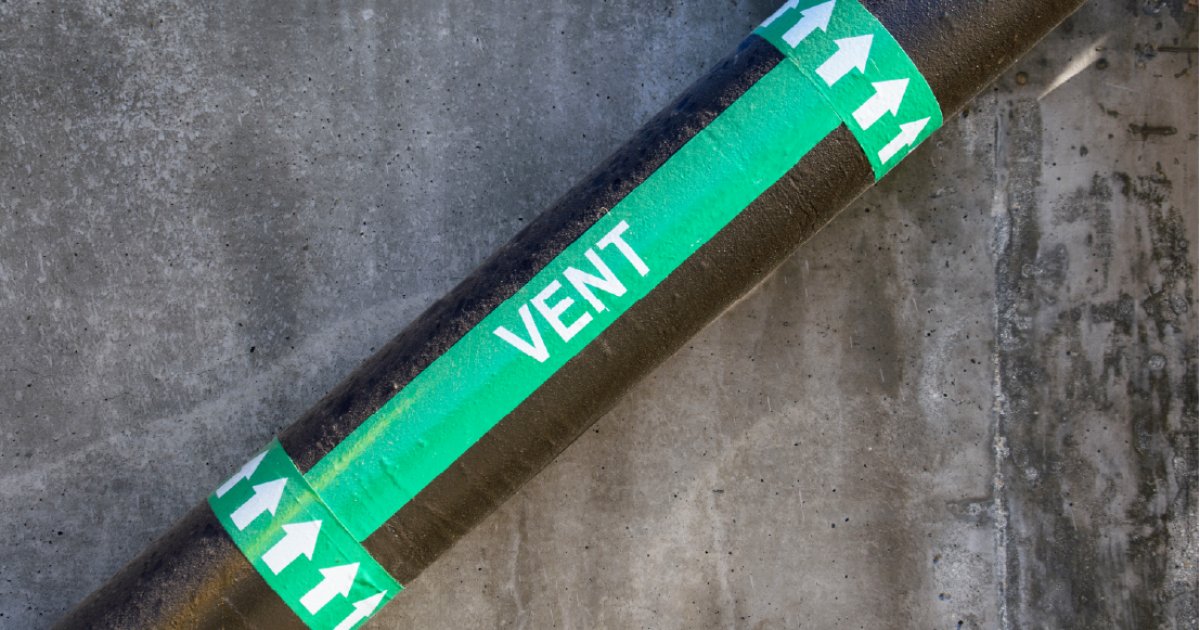
Pipe ID markers are not only an essential safety feature, but they may also be a compulsory part of your installation under the Health and Safety (Safety Signs and Signals) Regulations 1996. Pipe markers aid swift and certain identification of pipe contents for maintenance staff, buildings management and emergency services.
Sleeve It makes installation easy with coiled non-adhesive pipe markers, but how do you choose the right size to ensure a simple yet secure fit? Let’s take a closer look at how non-adhesive pipe ID markers work and how to choose the right size for your pipes.
How do non-adhesive pipe markers work?
As the name suggests, non-adhesive pipe markers do not need any glue or sealant to keep them in place. They are made from flexible, spiral shaped plastic, which is coiled like a spring. When wrapped around a pipe, the natural tension in this spring keeps the marker wrapped tightly around the pipe, with no need for further fastening or adhesive.
This makes non-adhesive pipe markers easy to install and ideal for both internal and external pipework. What’s more, because non-adhesive pipe markers don’t need to stick to the surface of the pipe, they’re ideal in a range of circumstances, including:
-
dirty or rusted pipes
-
pipes prone to condensation or other moisture
-
pipes exposed to oil or hydraulic fluid
-
pipes clad in insulation
How to choose the right size for non-adhesive pipe markers
Since non-adhesive pipe markers are naturally adaptive, you do not need to select a precise size that is exact to the millimetre. Non-adhesive pipe markers come in more general sizes, such as:
-
small (up to 25mm)
-
medium (25-50mm)
-
large (50-100mm)
-
extra-large (over 100mm)
The team at Sleeve It will be happy to advise on the best size of non-adhesive pipe markers for your pipework, with bespoke sizes available on request.
How to measure your pipes for non-adhesive pipe markers
-
Measure the external diameter of the pipe - it is important to remember that most pipes are specified, and listed on building plans, based on their internal diameter. However, non-adhesive pipe markers fit on the outside of the pipe, not the inside, so it’s important to measure the external size.
(Top Top – if you can’t measure the diameter of the pipe directly, use a tape measure to measure around the circumference of the pipe and divide by 3.14)
-
Allow for insulation – many pipes will have additional coatings and claddings to keep in heat or to protect nearby workers from excessive heat or cold. It’s important to allow for this when measuring for non-adhesive pipe markers.
-
Allow for variation – many pipes vary in thickness, especially around valves and junctions where pipe ID markers are required. Make sure that your coiled pipe markers will fit the whole of the system, wherever they are needed.
How to choose the right pipe ID markers
In addition to selecting the right size for your pipe identification markers, there are a few other factors that you need to consider:
-
Text size – consider the distance at which the text needs to be read, and ensure it is large enough to be legible.
-
Colour – there are standard pipe ID marker colours that are used across industry, and comply with BS1710, such as yellow for gas, green for water and light blue for air. Sleeve It can also produce bespoke colours on request for specialist installations.
-
UV resistance – if pipe ID markers are to be used outdoors, they need to be UV resistant or they will quickly fade and become unreadable.
Sort it with Sleeve It
For long lasting, easy to install and simple to specify pipe identification, look no further than Sleeve It non-adhesive pipe markers. Talk to our expert team today for free advice and make sure you get exactly what you need for simplicity, safety, compliance and lasting quality.
Frequently Asked Questions
A. Sleeve It offers a choice of coiled pipe markers and snap-on pipe markers. Both are fully compliant with BS1710 and can be made to match your exact requirements.
A. It is important to measure the outside diameter of the pipe, including any insulation or other sleeving. Pipes are often referred to on plans using their internal bore, and this will not take into account the thickness of the pipe wall.
A. You can get an approximate measurement of pipe diameter by holding a ruler across the pipe. Alternatively, use a tape measure to measure the circumference and divide by pi (3.14)
A. Non-adhesive pipe markers are easier to fit and can be used on all kinds of surfaces, including rusted and dirty pipes, wet or oily pipes and pipes with external cladding or insulation. They are also easier to remove and will last longer as there is no adhesive that will age and perish.
0 Comment
Add your Comment
We have the ability to edit and/or delete posts and comments. Links should be relevant to the topics. Please note all comments are subject to review before inclusion.
Login to comment
Register to comment
Blog Archives
Sleeve It Blog
What Are the Benefits of Non-Adhesive Pipe Markers?
Discover why self-adhesive pipe markers can fall short and how durable, non-adhesive pipe markers of...
Sleeve It Newsletter
If you would like to receive regular information via email from Sleeve It then please input your contact details below.
Nobody has commented yet. Why not add one?